Forever Editing Quote Retro SVG Design: Graphics for Crafts
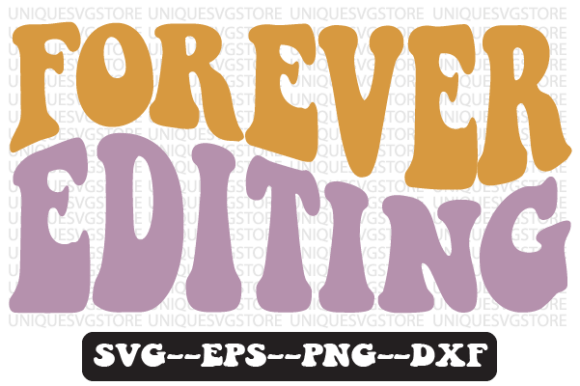
As a brand designer who’s built visual identities for over 30 local businesses—from artisanal candle studios in Asheville to family-run bakeries in Portland—I opened Forever Editing Quote Retro SVG Design expecting nostalgic charm. What I found was a tightly composed, mid-century-inspired typographic illustration with subtle halftone texture, warm mustard and burnt umber tones, and clean vector outlines. It reads immediately as “photographer’s quiet confidence”—not flashy, not trendy, but deeply human. This isn’t a generic clipart piece; it’s a considered graphic design asset that leans into authenticity, warmth, and tactile storytelling.
For a real-world test, I dropped Forever Editing Quote Retro SVG Design into the branding system I’m developing for Wildroot Apothecary, a handmade skincare brand based in Santa Fe. Their products—small-batch soaps, herbal salves, and linen-infused balms—are sold at farmers’ markets, indie boutiques, and their own cozy shopfront. Their customers value craft, clarity, and calm—not loud claims or digital gloss. The retro typography, slightly softened edges, and intentional spacing of this design aligned instantly with Wildroot’s voice: grounded, thoughtful, quietly confident. It feels handmade without being folksy, elegant without being sterile, and warm without veering into cliché.
This design excels where small business branding needs emotional resonance and visual cohesion. On product labels, it works beautifully as a secondary brand mark beside the logo—adding narrative depth without competing for attention. As a decorative element on kraft-paper soap wraps, it elevates shelf appeal while reinforcing the brand’s reverence for analog process. In packaging design, it shines as a foil-stamped accent on cotton muslin bags or as a debossed motif on rigid gift boxes. For hang tags and thank-you cards, its balanced weight and clear negative space ensure legibility even at 1.5 inches tall. And for social media graphics? It anchors Instagram carousels and seasonal campaign banners with instant recognition—no need for heavy reworking or over-designing.
Where Forever Editing Quote Retro SVG Design delivers tangible business value: it strengthens first impression by signaling intentionality; improves product recognition through consistent, memorable visual rhythm; supports clearer visual hierarchy when paired with clean sans-serif body text; builds customer trust via its understated craftsmanship; and elevates marketing visuals across print and digital—especially in editorial design contexts like recipe cards, seasonal lookbooks, or in-store posters.
It performs best in these real local business applications: product labels (as a supporting graphic, not primary logo), packaging accents (corner flourishes, band wrap motifs), hero graphics for website banners and email headers, decorative brand elements on reusable tote bags or tea towels, product mockups for Etsy or Shopify listings, printable inserts for subscription boxes, seasonal packaging (think autumn harvest bundles or winter solstice kits), boutique visuals for window decals or shelf talkers, and social media campaign graphics where tone matters more than trend-chasing.
Use it carefully in formal corporate branding—its warmth doesn’t suit law firms or fintech startups. Avoid placing it on very small labels (<1 inch) without testing legibility first. Steer clear when layered over busy backgrounds or ingredient-heavy layouts where clarity is non-negotiable. It shouldn’t compete with legal disclaimers, certifications, or regulatory text. Skip it for luxury minimalist brands leaning into monochrome austerity—it’s too expressive for that restraint. And never assume it’ll work on low-contrast backgrounds; always preview in grayscale to verify readability.
Here are my practical brand designer notes—field-tested, not theoretical:
- Test it on real packaging mockups—print it at actual size on your chosen label stock or box material to assess texture interaction and scale.
- Check black-and-white usage—many retro designs lose nuance when converted; this one holds up well, but verify before finalizing ink specs.
- Preview on small labels—at 0.75” height, the quote remains readable, but the halftone texture softens; consider simplifying for micro-applications.
- Test with your full brand palette—it pairs strongly with earthy ochres, deep forest greens, and cream kraft—but clashes with neon brights or high-saturation pastels.
- Compare against competitor packaging—in saturated categories like candles or coffee, this design stands out precisely because it avoids overused botanical line art or script fonts.
- Review PNG transparency—the included PNG has crisp alpha channels, ideal for Canva templates or web design overlays.
- Inspect SVG editability—vectors are cleanly layered and grouped, making font swaps or color adjustments straightforward in Illustrator or Affinity Designer.
- Test beside key typefaces—it harmonizes with serif fonts (like Playfair Display), modern sans-serifs (Inter, Montserrat), and even restrained script fonts (but avoid pairing with overly decorative or bubbly handwritten styles).
- Confirm commercial licensing—this is a licensed digital product intended for commercial design use, including physical product sales, client work, and small business branding—no attribution required, but always verify the vendor’s terms before scaling across retail SKUs.
Ultimately, Forever Editing Quote Retro SVG Design isn’t just another printable design from a creative marketplace. It’s a functional, emotionally intelligent graphic design asset—crafted with the nuance local businesses need to stand apart without shouting. Whether you’re designing for a children’s product brand launching its first line of organic cotton onesies, a florist building a spring campaign, or a food business updating its jar labels, this SVG design offers quiet authority and timeless warmth. It supports professional branding not by dominating attention, but by deepening meaning—making every label, every card, every banner feel intentionally made, not merely assembled. That’s the difference between decoration and brand identity. And for small business owners, handmade sellers, and creative entrepreneurs building something real? That distinction is everything.