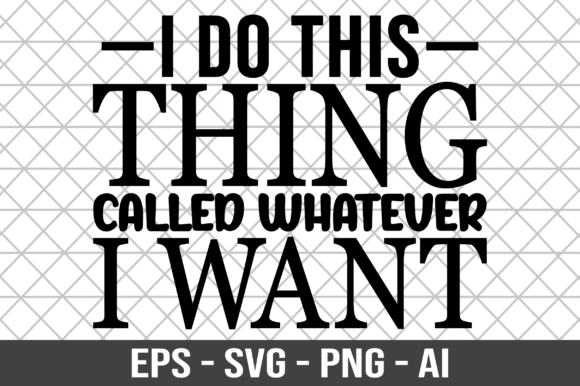
I Do This Thing Called Whatever I Want
First Impressions: Bold, Playful, and Instantly Recognizable
When I opened I Do This Thing Called Whatever I Want for the first time, I didn’t just see lettering—I felt its attitude. It’s not sarcastic or aggressive; it’s self-assured, lighthearted, and quietly confident. The layout balances rhythm and irregularity: some letters lean, others sit upright, spacing breathes just enough to avoid crowding but stays tight enough to hold visual unity. There’s no heavy ornamentation—no scrolls, no flourishes—just clean, confident shapes that suggest hand-drawn energy without sacrificing legibility. As a machine embroidery design, it reads well at 3–4 inches wide, which makes it ideal for tote bags, sweatshirt fronts, or apron pockets—not too small to vanish, not so large it overwhelms.
A Real Project Test: Embroidering It on a Linen-Cotton Kitchen Towel
Last week, I used I Do This Thing Called Whatever I Want for a custom order: a set of three embroidered kitchen towels for a small-batch boutique client. She wanted something that felt handmade but polished—fun without being childish, modern without feeling cold. I chose medium-weight linen-cotton blend fabric, medium-cutaway stabilizer, and matte cotton thread in charcoal gray and warm oat. The result? Crisp satin stitch outlines with soft fill-stitch interiors—no skipped stitches, no thread nesting. Because the design avoids ultra-thin lines or micro-details, it stitched cleanly even on slightly textured fabric. Customers responded immediately: “That’s *so* me,” one wrote in her Etsy review. That kind of resonance matters—it means the design isn’t just decorative; it’s emotionally functional.
Where It Shines (and Where It Needs Thought)
I Do This Thing Called Whatever I Want works beautifully on stable, medium-to-heavy fabrics: denim jackets, canvas totes, cotton sweatshirts, twill caps, and tea towels. Its open letterforms translate well into applique design workflows, too—you could easily cut a fabric base and stitch around it with clean satin borders. For baby embroidery or nursery decor, I’d recommend using softer pastel threads and pairing it with simple motifs (a single cloud, a tiny moon) to keep the tone gentle rather than brash.
But here’s where attention matters: on stretchy knits like t-shirts or lightweight jersey, you’ll need excellent stabilizer control—especially under the “W” and “R” where curves meet tighter corners. On dark fabric, test thread contrast early; light-colored threads can get visually lost if stitch density is low. And while the design scales well digitally, don’t push it below 2.5 inches in hoop size—smaller, and the interior negative space starts to fill unpredictably during stitching, blurring the personality of the phrase.
What It Adds to Your Finished Product
- Visual appeal: It draws the eye without shouting—ideal for boutique branding or curated gift sets.
- Stitching clarity: No overlapping paths or nested vectors, so your machine runs smoothly and your thread tension stays consistent.
- Product value: Feels intentional and designed—not clip-art. Customers pay more for that perception.
- Brand consistency: Works equally well on apparel, home goods, and digital mockups, helping small shop owners maintain a cohesive look across listings.
- Giftability: It lands as empowering, not ironic—perfect for graduation gifts, birthday totes, or “new job” sweatshirts.
Practical Notes Every Embroidery Designer Should Check
Before committing I Do This Thing Called Whatever I Want to your next client project or Etsy listing, do these five things:
- Test on scrap fabric first—especially if using textured, dark, or stretchy materials. Note how the “A” and “W” corners hold up.
- Review stitch density in your embroidery software. If it’s under 8,000 stitches, you’re likely safe for most commercial hoops—but verify before hooping expensive fabric.
- Confirm hoop size compatibility. This design fits comfortably in a 4×4 hoop at standard scale—but if you resize beyond 120%, double-check whether your machine handles larger stitch fields reliably.
- Inspect small details in black-and-white mockups. Does the phrase still read clearly when stripped of color? It should—and it does.
- Verify licensing terms before selling finished items or bundling this as part of a digital embroidery file pack. Since it’s listed under Crafts and Graphics, assume personal and small-business use is intended—but always confirm before scaling commercially.
Why It Fits So Well in Real Craft Business Workflows
As someone who’s reviewed hundreds of embroidery files for Etsy sellers and local makers, I notice what actually moves product off shelves—and I Do This Thing Called Whatever I Want checks those boxes. It’s versatile enough to anchor a holiday embroidery collection (think “I Do This Thing Called Holiday Chaos” variations), yet distinctive enough to stand alone on a minimalist pillow cover. It supports both digital embroidery file sales and physical handmade product lines because it translates cleanly across formats: SVG for Cricut users, PNG for printable mockups, AI/EPS for professional digitizers.
For craft business owners, this isn’t just another graphic—it’s a conversation starter. A customer who chooses this for their custom apron isn’t just buying embroidery; they’re signaling identity. That kind of emotional alignment builds loyalty, repeat orders, and organic word-of-mouth. And because it avoids dated trends or overused slang, it won’t feel awkward six months from now on your best-selling tote bag design.
Final Thought: Design With Intention, Not Just Ink
I Do This Thing Called Whatever I Want succeeds because it respects the craft behind it. It doesn’t try to do everything—it does one thing, clearly and memorably. Whether you’re stitching it on a baby onesie for a friend or building a full holiday collection for your small shop, it gives your work voice, warmth, and quiet confidence. That’s rare. And worth choosing deliberately.