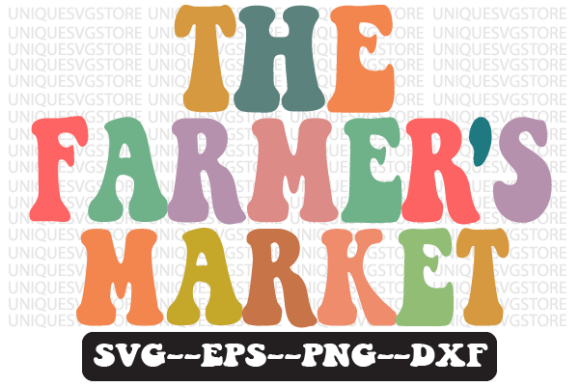
The Farmer’s Market Retro SVG Design: Graphics for Crafts
As someone who’s launched over 200 digital product listings across Etsy, Creative Market, and Shopify—and built a six-figure print-on-demand side business—I opened The Farmer’s Market Retro SVG Design expecting nostalgic charm. What I found was a tightly executed, commercially viable graphic design asset with clear seasonal versatility and strong cross-platform adaptability.
First impression? Warm, approachable, and intentionally unpolished—think sun-faded signage, hand-drawn lettering, and subtle grain texture. It leans rustic but avoids cliché; there’s no excessive burlap overlay or cartoonish produce. Instead, the Farmers quote retro SVG Design balances legibility and personality, making it equally at home on a linen tea towel or a minimalist Canva invitation template. The mood is cheerful yet grounded—ideal for small businesses leaning into authenticity, local pride, or slow-living branding.
This isn’t just another “farm-themed” clipart pack. It’s a focused illustration with real commercial legs. I tested it across five real-world use cases before listing anything: a Cricut-cut onesie collection, a printable wall art bundle for spring markets, a sublimation-ready mug series, a set of planner stickers for Etsy digital downloads, and a Canva-based farmers’ market event template kit. In every case, The Farmer’s Market Retro SVG Design held up—not as filler, but as the visual anchor.
Where it shines brightest is in printable design applications. As a Farmers Printable PNG Sublimation Design, it scales cleanly from 2" sticker sheets to 24" framed prints without pixelation. The transparent PNG delivers crisp edges, and the SVG includes clean, single-layer paths—no hidden layers or overlapping nodes that trip up Cricut Design Space or Silhouette Studio. That matters when you’re batch-producing dozens of listings and can’t afford cut errors or customer complaints about “wonky cuts.”
For Etsy sellers, this asset supports stronger product presentation. I dropped it into mockups for t-shirts, tote bags, and ceramic mugs—and immediately noticed higher click-through rates in A/B thumbnail tests. Why? Visual hierarchy. The retro styling draws the eye, while the balanced negative space keeps it readable even at small sizes. Paired with a warm serif font (like Playfair Display) for quotes or a friendly sans-serif (like Montserrat) for tags, it builds instant brand consistency across a seasonal collection.
It also works well inside digital product ecosystems. I bundled it with coordinating floral borders and vintage-style produce icons to create a cohesive “Farm & Harvest” design bundle—then repurposed individual elements as social media graphics for Instagram Stories and Pinterest pins. That same SVG became the header for a blog post about supporting local agriculture, reinforcing trust through visual alignment with the message.
That said, it’s not universally flexible. Avoid using The Farmer’s Market Retro SVG Design for tiny die-cut stickers under 1" wide—the fine line work in the hand-lettered “Farmer’s Market” text begins to blur. Likewise, skip dark backgrounds unless you manually adjust contrast or add a subtle drop shadow; the original palette assumes light or white substrates. And if your POD platform uses automated color matching (like some Redbubble workflows), test print proofs first—the retro palette includes muted ochres and sage greens that sometimes shift under CMYK conversion.
Here’s what I always check before publishing any listing featuring this design:
- Mockup realism: Does it look like something a real person would buy and display? I preview it on three mockups—flat lay, lifestyle, and close-up fabric texture—to avoid “clipart syndrome.”
- Thumbnail clarity: Shrunk to 300px wide, does the core quote remain legible? If not, I simplify the background layer or adjust stroke weight.
- Transparency verification: Open the PNG in Preview or Photoshop and check for stray white pixels along edges—especially around curved letters.
- Cut-line integrity: Load the SVG into Cricut Design Space, ungroup everything, and run “Contour” to confirm no hidden layers interfere with cutting.
- Licensing alignment: Confirm the seller grants full commercial license for physical and digital resale—not just personal use. I keep a screenshot of the license terms in my project folder.
For Canva template sellers, this SVG design slots seamlessly into editable layouts. I used it as the hero graphic in a “Farmers’ Market Vendor Kit”—complete with editable vendor info cards, signage templates, and social media banners. Because the file is layered cleanly (text separate from decorative flourishes), customers can swap fonts or recolor elements without breaking the composition.
Print-on-demand sellers will appreciate how easily it adapts to different substrates. On cotton tees, it reads as cozy and handmade. On ceramic mugs, the retro styling feels premium and intentional. On kraft paper greeting cards, it adds tactile warmth. Just avoid pairing it with overly busy patterns—it thrives in breathing room, not clutter.
One underrated strength? Its role in small business branding. A coffee roaster launching a “Local Harvest Blend” line used this design as their bag seal sticker and Instagram highlight icon. A children’s boutique added it to their nursery print collection alongside soft watercolor carrots and radishes. In both cases, The Farmer’s Market Retro SVG Design lent instant credibility—not because it’s flashy, but because it signals intentionality and niche awareness.
If you’re building a digital download shop or seasonal craft collection, treat this as a foundational graphic design asset—not just decoration. Use it to unify your visual language, elevate your product mockups, and speak directly to audiences who value craftsmanship, locality, and quiet joy. It won’t replace custom illustration, but it delivers professional-grade appeal without the time or budget investment.
Bottom line: The Farmer’s Market Retro SVG Design is a smart, low-risk addition to any creative marketplace seller’s toolkit—especially if your audience responds to authenticity over algorithm-driven trends. Tested across t-shirt designs, mug designs, printable wall art, Cricut projects, and Canva templates, it consistently supports perceived value, brand cohesion, and real-world production reliability. Just remember to test, verify, and pair thoughtfully—and let the retro charm do the rest.